material cabinet
Nothing here is rare. That is the point.
Labuso keeps a cabinet of ordinary samples because common materials are the ones most often misread. Paper is called simple until humidity changes it. Clay is called plain until it holds scent longer than glass. A worn finish is called damaged until the mark explains how an object was handled. The cabinet makes these comparisons visible.
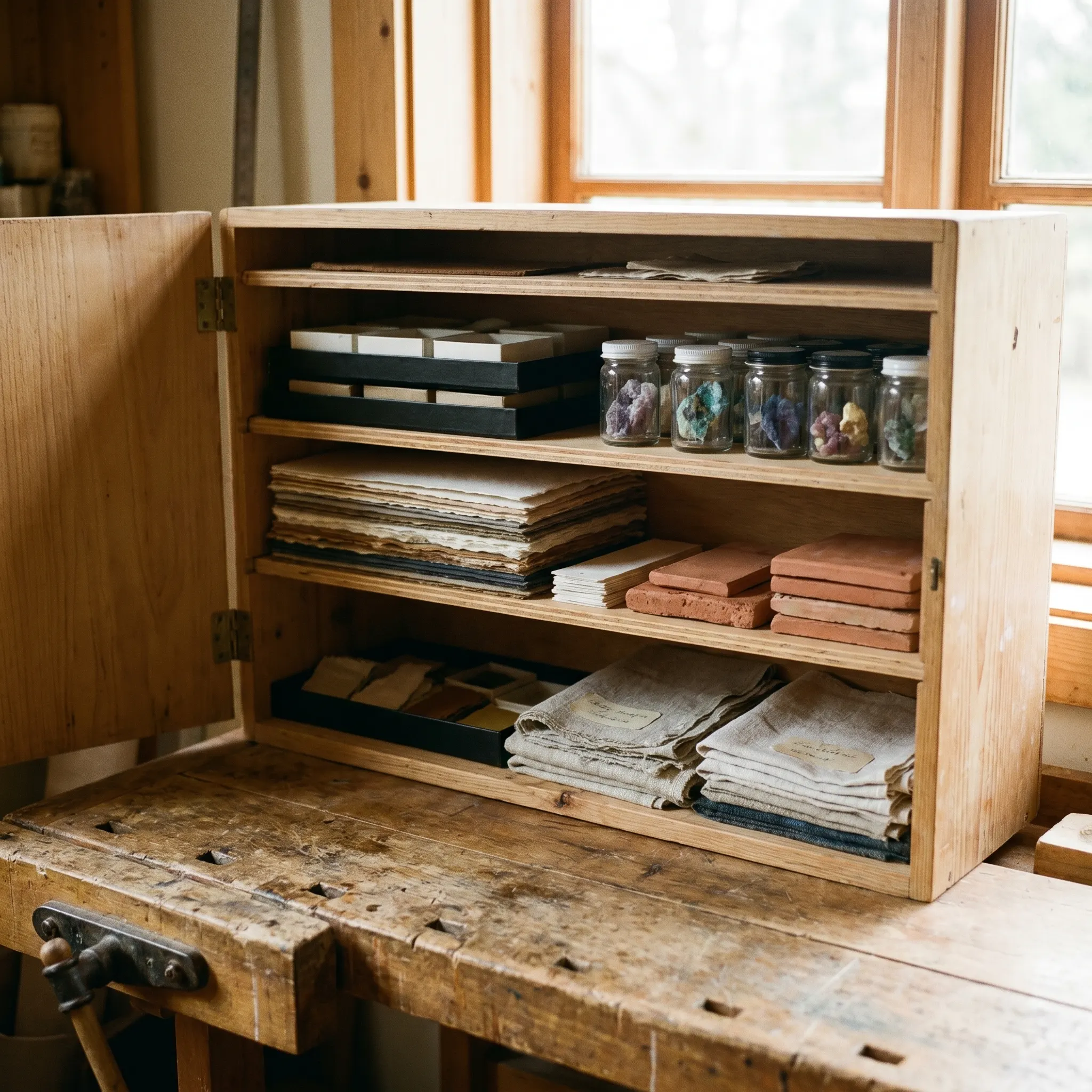
shelf logic
paper
tracing sheets, grocery paper, index cards, torn envelopes
mineral
salt, chalk, clay, oxide pigment, unglazed ceramic
plant
citrus peel, dried leaves, stems, seed husks, weak tea stains
finish
wax, oil, soap film, water marks, pressure polish
care notes
The cabinet is not a collection display.
Samples are kept because they answer questions. Which paper keeps a crease after a damp morning? Which vessel turns a sharp peel into a softer room note? Which surface becomes more legible after repeated touch? The cabinet is organized around these practical comparisons rather than rarity or price.
A material can leave the cabinet when it stops teaching anything new. Labuso favors a small set of handled references over endless accumulation. The useful sample is the one that can be placed beside a new object and make a difference visible: brighter, duller, more absorbent, more brittle, slower to release scent, quicker to show wear.
This makes the cabinet a working vocabulary. It gives future articles and notes a shared set of comparisons, while the public pages remain understandable to readers who have never kept samples of their own.